You walk into a store to buy a TV. You do not listen to the salesperson, ignore all the ads, you just ask for the manual. You read the specs, the way it works, and decide, I will take it. A white paper works the same way. It is not marketing, it is a technical passport of a project, where everything is backed by numbers, not words. But are numbers alone enough for you to believe?
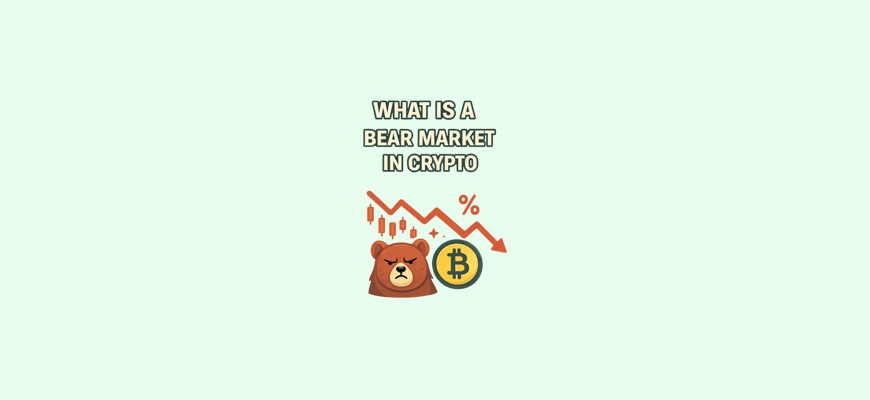
What is a bear market in crypto
A bear market is like a crypto winter, where neither shorts nor old profit screenshots keep you warm. Charts are blood red, Twitter goes quiet, and chats are filled with silence and pain. Everything that was going up yesterday is now falling. This is not a place to trade, this is a place to survive. And the question is not when you bought, but whether you can last until spring.
A bear market is when cryptocurrency prices fall steadily over a long period of time. Not for a couple of days, not for a week, but for months or even years. It starts with a small drop, then the numbers keep getting lower, and the market mood gets darker and darker.
Simply put, it is a state where most people lose confidence. Everything is going down, and it feels like it will never come back up. Bitcoin was at 100,000, now it is 60,000. Ether was at 5,000, now it is 800. People stop buying, they are afraid to enter the market, and those who invested earlier start panic selling at a loss.
This kind of market does not just fall. It loses its pulse. Trading slows down, interest fades, activity hits a minimum. This is the real crypto winter, when the only thing you need to do is endure.
It is important to understand that this is not just a normal pullback. A correction is like taking a break after a climb. A bear market is a long descent into fog. It is hard to move, you cannot see far ahead, but this is exactly where the foundation for future growth is built.
A simple example:
Think about nature. Autumn and winter are the time when everything goes into hibernation. Leaves fall, birds fly away, everything looks dead. But in spring, it all comes back, stronger and growing again. Crypto works the same way. You just need to know how to wait.
Reasons for a bear market in crypto
On the crypto market, emotions decide a lot. News, rumors, fear, everything hits instantly. Sometimes one tweet or a loud article is enough for prices to start collapsing. Someone says mining will be banned, the market deflates. A major exchange goes bankrupt, investors panic sell. A war starts, a crisis hits, or a bank defaults, it all reflects in the price immediately.
Crypto is like a mirror of fear. Stocks move too, but not as sharply. The crypto market is younger and more emotional. There is less regulation, fewer big players, and a lot more beginners who are afraid to lose everything. And fear is a powerful seller.
If stocks drop by 10 percent, crypto can drop by 40. That is normal for a market that is still growing up. The key is not to be surprised, but to understand that these periods have happened before and will happen again. There is no way around them. And the louder the panic, the faster it usually ends.
Strong bear markets often come after a sharp rally. When everything was flying up, people thought it would last forever. But markets work differently. If something rises too fast, a correction follows. Sometimes a mild one, sometimes a full winter.
What a bear market looks like
If you look at a crypto chart during a bear market, the first thing you notice is that everything is going down. Not just one candle, but a whole series. Day after day, week after week, the price falls without giving any strong signal for growth.
On the chart, you can see how the price keeps stumbling over levels called support. These are points where the price is supposed to stop. But in a bear market, it breaks through them easily and keeps going lower. Every time it feels like this is the bottom. And every time, the bottom turns out to be even lower.
A resistance level is like a ceiling that the price cannot break through. If the market tries to rise and then falls again, it is a sign that growth is not coming yet. These moves repeat like waves, a small rise, a drop, another attempt, then down again.
A real life example:
In 2018, Bitcoin fell from 20,000 to 3,000. Everyone thought it was over. But a couple of years later, it came back, first to 20,000, then to 60,000. Today it is worth over 110,000 dollars. This proves one thing, a bear market is not a sentence, it is a pause before growth.
What to do during a bear market
The first thing to remember is do not make decisions based on emotions. Panic is your main enemy. When everyone is afraid, you need to stay calm. Selling at the bottom locks in losses. You bought high, you sold low. No logic, only fear.
If you do not know what to do, it is often better to do nothing. Just hold your assets and do not rush. Sometimes waiting is the best move. Those who stay calm often win more than those who panic and jump around.
There are a few approaches that help get through a bear market with minimal losses:
- Long term holding. You buy and forget. In a year or two, prices can rise significantly.
- Averaging. You buy small amounts regularly, once a week or once a month. On average, you enter the market at a good price.
- Stablecoins. You move funds into USDT and wait until the market stabilizes.
And most importantly, learn. A bear market is the best time to read, watch analysis, and understand how things work. It is much easier to learn in calm conditions than at the peak, when everyone is shouting buy.
Mistakes in a bear market
The most common mistake is selling everything at the bottom. It is a reflex. You see minus 50 percent and your hand reaches for the sell button. Then the market recovers, and you are left out. The losses are real, and you missed the growth.
The second mistake is buying cheap coins just because they look cheap. A token was 10 dollars, now it is 1, so it feels like a gift. But no one guarantees it will grow. Sometimes prices fall because the project is dying.
The third mistake is listening to everyone. Bloggers, channels, friends. Everyone gives advice, but no one takes responsibility. You do. It is your money. In crypto, it is crucial to think for yourself. Other people’s advice is not a strategy.
Do not rush. Do not react to every noise. And do not forget, your main tool is calmness.
Conclusion
A bear market in crypto is when prices fall for a long time, people panic, and interest in crypto fades.
It is not a catastrophe, but a normal phase of any financial market. It shows who is ready to invest and who came for quick profits.
If you understand what is happening and stay calm, you are already stronger than half of the market participants.
These periods are what teach you. Those who go through them with a cool head often achieve the strongest results later.