Imagine holding the key to an apartment, but instead of a heavy metal keychain, it’s just numbers in a wallet on your phone. That’s exactly how a friend of mine managed to sell a share of his real estate without meeting the buyer and without even leaving home. The world has started turning real assets into digital “pieces” that can be transferred as easily as sending a message. But are you ready to trust real-world value to the blockchain world?
What is RWA in crypto
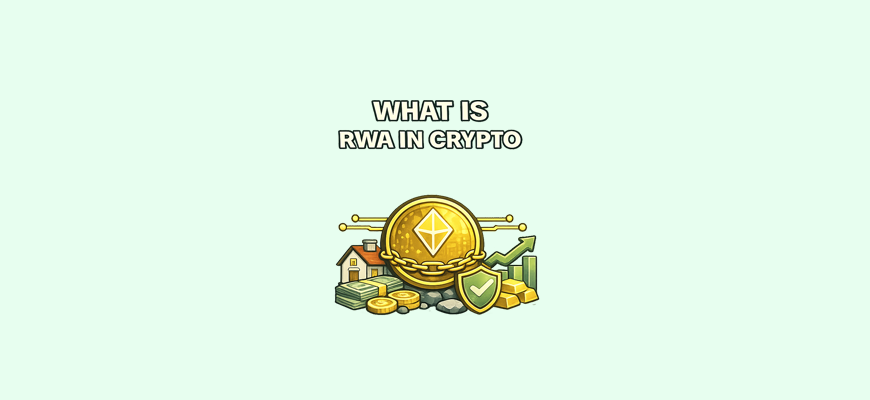
RWA are real-world assets that have been converted into a digital format using tokens. In simple terms, there is a real object or value, gold, an apartment, a bond, raw materials, and in the digital environment a token appears that is linked to this object and represents ownership rights. This is not a virtual coin without backing, it is a digital form of real property.
For a real object to turn into a digital token, several steps are required. First, the asset itself is verified, documents, value, and existence are checked. Then a token is created that specifies exactly which part of the object you own, and its value starts to depend on market factors, just like the price of Bitcoin. This step is directly connected to how cryptocurrency was first invented and how it all started. This token works as digital proof that cannot be lost, damaged, or forged. And all of this is available in a regular crypto wallet, where storage takes seconds and transfers are as easy as sending a photo in a messenger.
RWA became popular because they remove barriers that used to complicate access. You don’t need to dive into complex legal details. You don’t need to buy the entire asset. You don’t need to store gold at home or pay for a bank safe deposit box. Everything works through a digital format where ownership becomes simple, flexible, and convenient.
A simple example:
You can’t buy an apartment outright, but you get the chance to buy a small share and receive part of the income. Everything is done not through paperwork, but through a token that represents your share. That’s the whole secret behind how RWA works.
What assets can be tokenized as RWA
Many familiar assets are suitable for tokenization, especially those that used to seem too bulky or expensive for the average user. This includes real estate, which has always been valued for its stability. Gold and other precious metals, traditionally seen as protection against economic swings. Commodities and industrial materials with established value. Securities, bonds, or funds that allow you to earn income without complex financial instruments.
What moves into the digital format is the most important part, the ownership right and the value of the asset. The asset itself remains in the real world, in storage, in a warehouse, in a depository, or at a physical address if it’s real estate. The digital version reflects only ownership rights, which makes the process safe and transparent.
These assets are suitable for tokenization because they clearly have value, a understandable price, and can be easily divided into parts. This makes them ideal for transferring ownership rights into a convenient digital format and allowing participation even for those without large amounts of capital.
Why RWA are needed and how they benefit beginners
RWA open access to assets that were previously out of reach. You can buy small shares of expensive items without saving for years. You can own assets whose value is tied to real objects, not to sharp market demand swings. You can move ownership into a convenient digital format without paperwork, office visits, or long procedures.
This is especially useful for beginners because it allows you to start with small amounts without risking large capital. Entry becomes flexible, transparent, and clear, turning complex investments into an accessible tool.
How the tokenization process of real assets works
The first step is asset verification by the owner. This is done through documentation, checks, and valuation. Then a token is issued that represents a specific object and a specific share. After that, the token enters the digital environment, where it can be bought, stored, and transferred.
All complexity and paperwork stay behind the scenes. The user is no longer affected by it. They get the ability to own a share of a real object in a convenient digital format without technical barriers.
Advantages of RWA for the average user
The user gets the opportunity to own parts of expensive real-world assets that were previously available only to large investors. They get simple storage, the token sits in a wallet, takes no space, and carries no risks associated with physical storage. They get transparency, you can always verify the origin of the token and confirm that it is truly linked to a real asset.
These advantages are especially valuable if you want to invest in reliable assets while avoiding complexity.
What risks beginners should understand
Before buying, it’s important to consider that different assets sell at different speeds, liquidity can vary. You need to make sure the asset actually exists and is confirmed by documents, otherwise the token loses its meaning. It’s also important to understand restrictions related to different countries and regulations, sometimes access is limited by legal rules.
The most important thing is not to rush and not to choose a project without proper checks. This simple rule helps avoid mistakes.
How to safely choose an RWA project
The very first step is to check the existence of documents for the asset, who owns it, where the object is located, and how its existence is confirmed. Next, it’s important to understand how the token is linked to the asset, what rights it gives, and how this connection is recorded. And of course, avoid projects where information is hidden or conditions are unclear, lack of transparency is always a signal to walk away.
If a project is clear, open, and document-backed, the risk goes down and the benefits become more obvious.
Conclusion
RWA are a way to own real assets in a convenient digital form, where the key factor is not the size of your capital, but accessibility and simplicity. You don’t need to buy the entire asset, you can own a share. You don’t need paperwork, everything works through a token. You don’t need to store valuables at home, the digital format solves that. This combination of real value and digital convenience becomes a logical step for those who want to invest calmly and without unnecessary difficulties. And if you’re wondering what RWA in crypto are and why you might need them, the answer is simple, it’s a modern way to access real assets without barriers or complexity.