Imagine you walked into a sale, saw an item at one price, reached out for it, and at checkout it was already more expensive. In crypto, this happens all the time, and it is not a mistake, it is a feature of the market. While you are confirming the trade, the price can change because other participants were faster. Slippage is like a rush-hour crowd: someone gets through first, and you pay for the hurry. How often does the market take more from you than you planned?
What slippage is in cryptocurrency
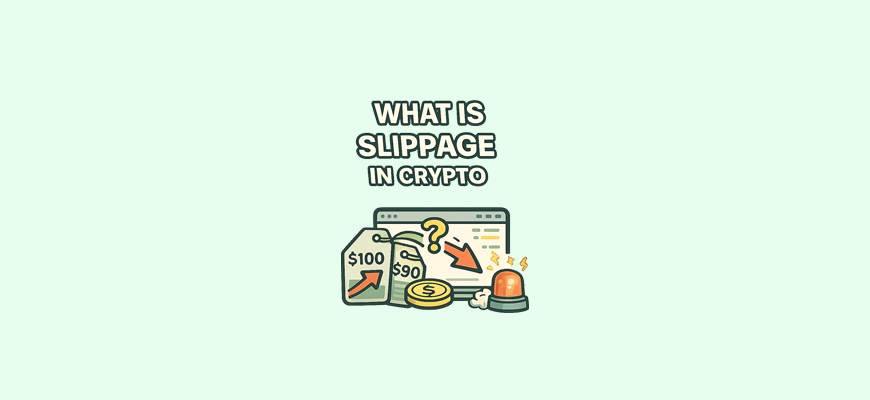
Slippage in cryptocurrency is a situation where the trade price is different from the one you saw and expected when you clicked the buy or sell button.
Put simply, you planned one thing, but got another. You agreed to one price, but the system executed the trade at a different one. Most often, the difference is not in your favor. It is important to understand one simple idea. The price in cryptocurrency is not fixed for you personally. This is not a store with a price tag. It is a live market where thousands of people act at the same time.
Example:
You go to an airline ticket website. You see a ticket for $100. You click “buy”, enter your details, and at the last step the price is already $108. Someone bought the $100 ticket before you. The system offers the next available price. The same thing happens in cryptocurrency.
Slippage is not a mistake, not a glitch, and not someone’s bad intent. It is a normal result of fast price changes and a limited number of available offers.
Why slippage happens
The first reason is the price changing at the moment the trade is executed. While you click the button, while the system processes the request, the price can change. Sometimes just a little, sometimes noticeably.
The second reason is a lack of offers at the price you need. At the price you saw, there may be too few sellers or buyers. Your trade is larger than that volume. The rest gets filled at the next price, which is already worse.
The third reason is fast market movement. When the price moves sharply up or down, trades happen literally in fractions of a second. In moments like that, the market simply does not have time to adjust for everyone. The result is a deviation from the expected price.
Here it is important to understand one thing, the market does not adjust to one person. It works on a first-come, first-served basis. Whoever gets there first buys cheaper.
When slippage gets stronger
Slippage becomes more noticeable during sharp price jumps. This happens after news, rumors, or sudden Bitcoin moves. The price can change several times in one second.
It feels stronger when you buy or sell a large volume. The bigger the amount, the harder it is for the market to find enough offers at one price. The trade seems to split into parts, and each part goes through at its own price.
Slippage also happens more often when working with less popular assets. Little-known coins are bought and sold less often. There are fewer offers, and the gap between prices is wider. Even a small trade can move the price a lot.
Put very simply, the more popular and calmer the asset is, the fewer surprises you get.
How to tell if you had slippage
The first thing to do is check your trade history. It always shows the actual price at which the trade was executed. Then compare it with the price you saw before confirming. If they are different, then there was slippage.
Pay attention to the final amount. Sometimes the price difference looks small, but in money it feels much bigger. Especially if the trade is large.
Why does the final result turn out worse than expected? Because the market is not required to execute the trade at exactly the number you saw. It executes it at the price that is actually available at the moment of execution. It is неприятно, but it is part of the rules of the game.
How to reduce slippage
The first and simplest thing is not to rush when confirming a trade. If the price is moving sharply, it is better to wait a few minutes. The market often calms down on its own.
Second, avoid trading during moments of strong movement. If you see the price flying up or falling down, the risk of slippage is at its highest.
Third, choose popular coins. They have more participants and more offers, which means the price is more stable.
Fourth, do not enter with your full amount all at once. Splitting the trade into parts often helps reduce the overall effect of slippage.
Fifth, always check the final numbers before confirming. Even a few seconds of attention can save money.
Final thoughts
Slippage in cryptocurrency is the normal difference between what you expected and how the market actually worked. It appears because of speed, price movement, and a limited number of offers. Understanding this removes fear and the feeling of being cheated, which is important because many beginners start to wonder if cryptocurrency is a pyramid scheme when they see unexpected results. Now you know what happens at the moment of a trade and why the numbers sometimes differ. This knowledge helps you make decisions more calmly, more confidently, and without unnecessary emotions, and also better understand situations when you may receive unexpected results or rewards, such as retroactive airdrops in crypto.