In a quiet bay, everything looks calm. Small schools of fish swim around, and then a giant whale bursts in. The water churns, the small creatures panic, and the whale slowly turns and swims away, leaving chaos behind. The crypto market works the same way. One big player can crash the price or send it to the sky with a single click. Who are these powerful creatures that rule the underwater world of crypto?
Who are whales in cryptocurrency
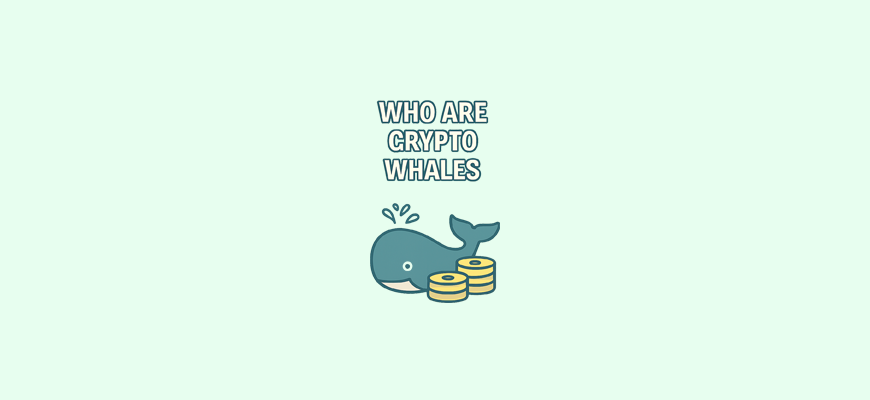
Crypto whales are people or organizations that hold very large amounts of cryptocurrency. They are nothing like regular investors, like you and me. Their transactions are like huge ocean waves. When they move, everything around starts to shake.
The word “whale” comes from English and quickly became part of crypto slang. It is a perfect metaphor. The sea is full of small fish, these are regular investors. And whales are massive creatures that can affect everyone with a single move.
What amount is considered “whale-level”? It depends on the specific cryptocurrency. In Bitcoin, it is usually 1,000 BTC or more. In Ethereum, tens of thousands of ETH. But it is not just about numbers, it is about influence. If the actions of one person cause price volatility, you are looking at a whale.
A simple example:
Imagine a supermarket with limited stock. One person buys all the butter. The price of butter goes up, everyone else panics and runs to find what is left. Some people overpay. Some get nothing. All because of one buyer. Crypto works the same way, just with higher stakes.
How whales affect cryptocurrency prices
When a whale makes a big purchase, everyone notices. And it does not matter if you understand blockchain or not, the information is public. Someone thinks, “If they are buying, the price will go up.” Mass buying starts. The price rises, sometimes in minutes.
When a whale sells, the opposite happens. People get scared and rush to sell before the price drops even more. A domino effect kicks in. Some sell, others panic, the market goes down.
Sometimes one single trade is enough to affect millions of people. Because the market is not just about money. It is also about emotions, fear, and greed. And whales know how to use that. Some intentionally move the market to profit from it. They buy cheap, push the price up, sell expensive, and walk away with profits while everyone else is still trying to understand what happened. And in low-quality new tokens, this kind of manipulation can be part of a rug pull — so it’s worth knowing the red flags before you follow the hype.
How to track whale activity
Whale behavior is a marker of what might happen next. They are like conductors in an orchestra. They barely speak, but everyone follows.
The good news is that you can see almost everything whales do. Crypto is a transparent market, and the blockchain is open.
Here are the tools worth starting with:
1. Whale Alert
One of the most popular services. It shows large crypto transfers, who sent them, where, and how much. For example, if someone moves 5,000 BTC to an exchange, you will see it there. You can enable alerts on social media.
2. Blockchain Explorer
This is like a magnifying glass for the blockchain world. Enter a transaction ID or wallet address and see the full history. If you notice a large wallet sending coins to an exchange, a sell-off might be coming. If coins move from an exchange to cold storage, the whale is likely going quiet.
3. Glassnode
An analytics platform where you can see reports, charts, and large address behavior. There is a free version, and even that is enough to understand the bigger picture.
Important: not every large transaction is a market attack. Sometimes whales are just reorganizing their funds. But if you track trends, you will learn to separate real signals from noise.
Summary
Whales are major players who can influence the crypto market. They create moves that everyone feels, even those with just a few hundred dollars in their wallet.
The key is not to fear whales, but to watch them. Understand what they are doing, why, and where it might lead. That way, you are not part of the crowd chasing price moves, but among those making calm, informed decisions.
Watch the whales, and you will stay one step ahead. Because if you want to catch the wave, you need to know when a whale enters the water.